
5 Ways Access Control Improves Safety in Schools
Schools are first and foremost places of learning. For students and staff to thrive, they need to feel safe and secure throughout the day. With hundreds of people entering, moving around, and leaving a campus daily, managing security can be a major challenge. A well-designed access control system not only simplifies these day-to-day operations but also plays a vital role in protecting people, property, and resources.
In line with Ofsted guidelines, schools are expected to adopt best practice for creating safer environments. That includes securing the perimeter, protecting individual buildings, and controlling entry to restricted areas within those buildings. Access control offers a simple yet powerful way to achieve all three.
1. Ensuring Only Authorised Access
Parents expect that when their children are in school, they are safe. Access control ensures that only authorised adults — staff, contractors, or approved visitors — can enter the premises. Credentials such as cards, PIN codes, mobile devices, or even biometric verification can be issued and managed by the school.
Within the campus, access-controlled doors prevent students from wandering into areas that may pose risks, such as kitchens, server rooms, or science labs. This creates a secure environment without compromising the flow of everyday school life.
2. Managing High-Traffic Zones
At peak times — morning drop-off, lesson changes, and the end of the school day — campuses become high-traffic environments. To keep everyone moving efficiently, access control systems can be configured with time-based rules that temporarily lift restrictions in certain zones.
This flexibility ensures smooth circulation while still maintaining safety and preventing bottlenecks or overcrowding in corridors, entrances, and common spaces.
3. Reducing Theft and Vandalism
Schools are home to large amounts of valuable resources, from IT equipment to sports gear. Unfortunately, this makes them attractive targets for theft and vandalism. Access control helps deter opportunistic crime by keeping doors securely locked when not in use.
With online systems, schools can schedule access rules based on time of day or day of the week, meaning that at evenings, weekends, and holidays, doors remain firmly secured — protecting assets and giving staff peace of mind.
4. Rapid Lockdown in Emergencies
In today’s world, schools must be prepared to respond quickly to emergencies. Modern access control platforms include a lockdown function that allows administrators to instantly secure the entire site with a single command.
This rapid response capability prevents threats from moving freely through the campus, buying valuable time for staff and emergency services to act effectively and protect students.
5. Supporting Investigations with Better Reporting
Access control systems don’t just prevent incidents — they also support investigations if one occurs. Every entry event is logged, providing a clear record of who accessed which doors and when.
By analysing these reports, school security teams can build a detailed timeline of events, narrow down enquiries, and respond more effectively to breaches or disputes. This accountability helps strengthen overall safeguarding policies.
Best Access Credentials for use in schools
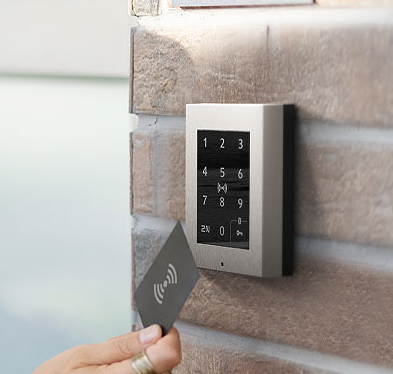 RFID-based Access Cards & Key Fobs
- Widely used and reliable: RFID proximity cards and key fobs remain the most common choice for school environments
- User friendly: Users simply tap or wave near a reader. Key fobs are compact and portable; cards are wallet sized and familiar
- Secure & manageable: Easily assign or revoke access, track entry events for audit logs, and prevent unauthorised access
- Scalable: Ideal for managing multiple user groups (students, staff, visitors); more affordable to replace versus re-keying traditional locks
- Integration potential: Compatible with other systems like CCTV, attendance tracking, and lockdown procedures
PIN Code Access
- Low-cost solution: Keypads are inexpensive compared to issuing physical credentials like cards or fobs, making this attractive for schools with limited budgets.
- No physical tokens needed: Eliminates the problem of lost, forgotten, or damaged cards/fobs. Pupils and staff just need to remember a code.
- Flexible use: Codes can be assigned per individual, per group, or per door, and changed easily if compromised.
- Good for visitor or temporary access: Short-term PINs can be created for contractors, parents evening, or supply teachers without issuing physical IDs.
Limitations:
- Less secure than RFID/smart credentials, since PINs can be shared, observed, or forgotten.
- Keypads may wear down over time, revealing commonly used digits.
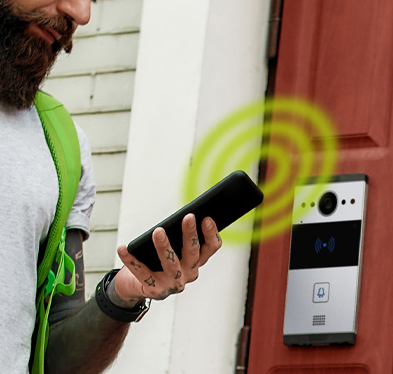 Mobile Access (Smartphone Credentials)
- Modern and convenient: Uses smartphones as credentials—no need to carry extra items
- Easy management: Permissions can be granted or revoked remotely; smartphones are less likely to be forgotten or lost
- Flexible and scalable: Can be combined with RFID or biometric systems to allow multi factor authentication
Biometric Systems
- High security: Biometrics such as fingerprint or facial recognition are difficult to forge and eliminate the need for physical tokens
- UK prevalence: Fingerprint (thumbprint) scans are the most common biometric in UK schools; iris or vein scanning also used occasionally
- Drawbacks: Higher cost, privacy concerns, and potential resistance from parents or staff make deployment more complex
Hybrid / Multi-Factor Approaches
Combining a primary credential (e.g., card or mobile) with a secondary method (PIN or biometrics) can enhance security while allowing flexible access management.
Comparing different Access Credentials for use in Schools
Credential Type |
Pros |
Cons |
|---|---|---|
| RFID Cards / Key Fobs | Cost-effective, easy to manage, scalable, integrates well | Can be lost or cloned if not managed properly |
| Smart Cards | Secure, multi-functional (ID, access, attendance) | Smart Cards Secure, multi-functional (ID, access, attendance) Slightly higher cost; needs readers compatible with smart tech |
| Mobile Access | Convenient, remote control, no physical tokens | Mobile Access Convenient, remote control, no physical tokens Requires compatible devices; relies on users having smartphones |
| Biometrics | Highly secure, no physical credential needed | Costly, privacy concerns, potential resistance to adoption |
| Hybrid Systems | Greater security via multi-factor authentication Complexity, cost, potentially slower process for users | Complexity, cost, potentially slower process for users |
Creating Safer Learning Environments with CIE
An effective access control solution is now an essential part of any school’s security strategy. From managing daily traffic flow to emergency lockdowns, the right system ensures peace of mind for staff, students, and parents alike.
At CIE Group, we work with leading manufacturers to deliver access control systems tailored to the education sector — from simple card readers to advanced biometric and cloud-based solutions.
Click here to view some of the many Education projects handled by our team
Read more:
-
What is a Dynamic Lockdown Procedure?
-
How to create a School Lockdown Procedure
-
What is access control?
-
How to design an Access Control system
-
What is a Contactless Pathway?