Face Recognition in Access Control & Door Intercoms
From unlocking your smartphone or authenticating contactless payments, to speeding-up the identification process at airport border controls, to the most recent, burgeoning application of hands-free face recognition for door entry and access control; facial recognition is one of the fastest growing biometric security technologies.
It’s clear that secure, hands-free technology such as this is a vital part of future-proofing new buildings to help combat the spread of viruses and infection; whether it be prevention of COVID-19 or regular seasonal bugs, colds or flu.
How does face recognition access control work?
Latest generation access control and door intercom systems are now increasingly adopting face recognition for highly secure authentication and keyless door entry.
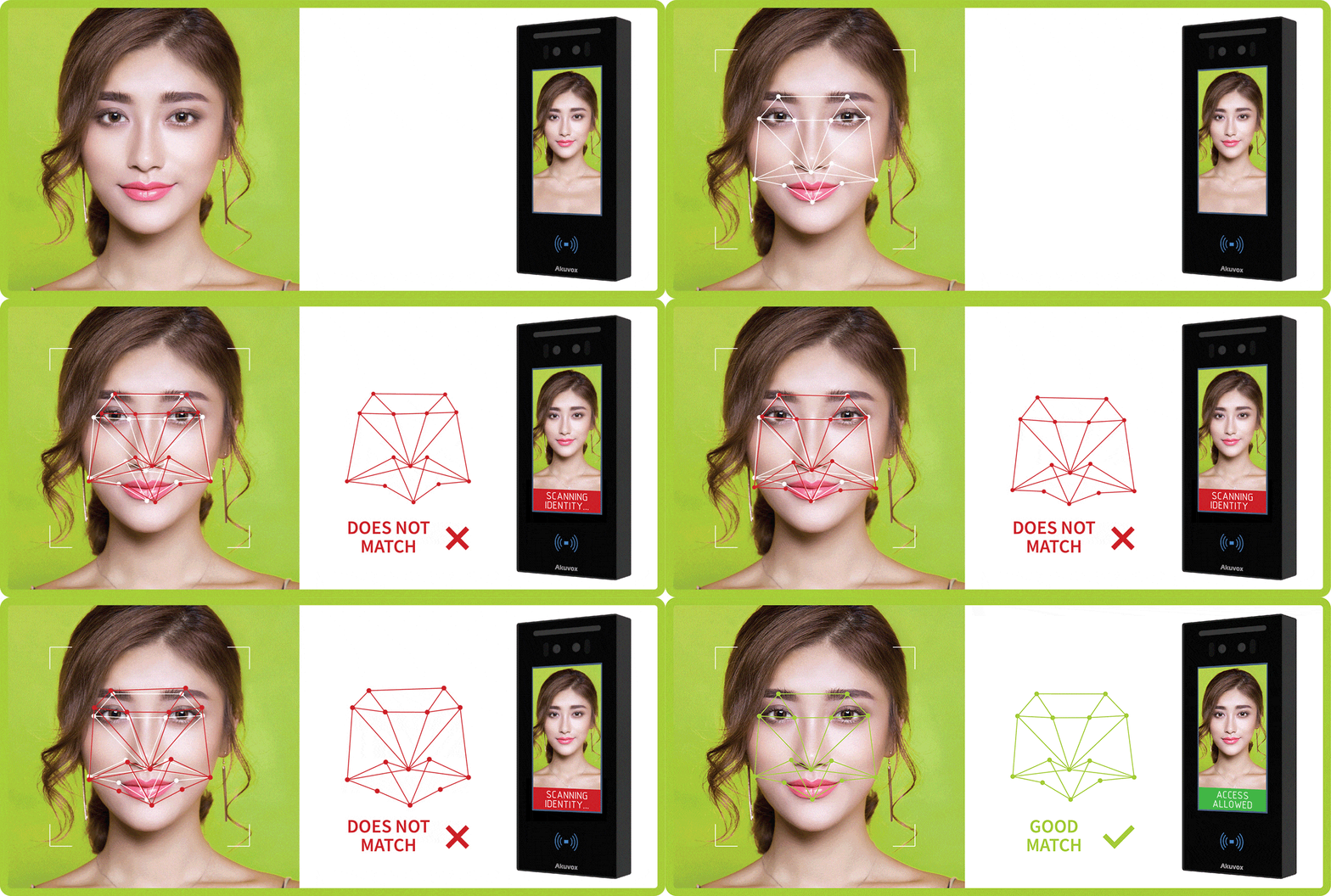
To register, each individual to be added to the access system (eg. residents in an MDU/apartment building or multi-tenant office workers) requires an initial face scan or photograph of their face. The access control system uses AI algorithms to convert the image of the face into what is effectively a series of ‘co-ordinates’ – accurately pinpointing the distances between eyes, nose, mouth, ears, etc – to create a unique identifying string of numbers which is stored in the system’s database.
In doing so, the access control system does not actually store an image/photograph of the individual’s face – therefore complying with the personal data storage privacy rules of GDPR.

A face recognition-based system will use access control end-points featuring integrated, high resolution cameras which will provide a live face scan of the individual at the door or gate.
To authenticate each individual’s identity and, therefore, allow access, the system will accurately match the unique face ‘co-ordinates’ to those stored on the database.
Can face recognition be fooled by photographs?
The latest AI face recognition access control systems – such as the Akuvox range – also incorporate anti-spoofing ‘liveness’ detection, using an additional built-in camera to detect 3-dimensional facial awareness and movement.
Touch-free Access Control
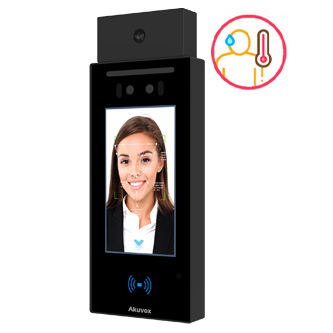 Facial recognition is one of a number of touch-free authentication methods being adopted for both access control and door intercom systems, as part of contactless pathway parameters in latest-generation building design.
The Coronavirus pandemic has resulted in a huge growth in the requirement and application of touch-free technologies and products in workplace and multi-tenant environments to reduce the frequency of contact between individuals, thereby helping to reduce the risk of virus transmission.
Therefore, authentication methods which allow users to identify themselves without physically touching devices (technologies such as RFID, NFC, Bluetooth – and now face recognition, of course) are becoming the preferred options for door intercom and access control systems.
What are the benefits of Access Control facial recognition?
-
Hands-free user authentication
One of the fastest growing trends in building design and technology is the application of touch-free user experiences. The combination of rapid expansion in multi-tenant living & working spaces and the Coronavirus pandemic has resulted in an increasing requirement for contactless living and working environments.
-
Improved security
The latest generation of Facial Recognition devices provides accurate and highly secure authentication, when compared with traditional access methods such as PIN code or keyfob door entry.
-
Fast, convenient and remote management of user IDs
Addition, removal and control of User accounts is easy and simple for system administrators and can be fully managed remotely.
Whereas authentication via physical device requires fobs or cards to be handed-out in person or delivered (and returned), new User IDs can be created and disabled by system administrators (such as security, HR or concierge personnel) from any remote site using cloud-based management platforms, significantly speeding-up the process to save time and money.
-
No authentication device required
Many door entry and access identification methods require the use of a physical device to authenticate – such as keyfob, RFID card or smartphone. Should the user forget or lose their ‘device’ (or worse still – have it stolen), then they will be unable to access the building.
The authenticating ‘device’ of face recognition will always, of course, be with you!
-
Integration with other platforms
Facial recognition access control systems can also be integrated with other logistical and system platforms, such as time & attendance, automatic payment systems or building management systems, helping to develop smart building environments.
Does facial recognition work with face masks?
The accuracy and security of face recognition access controls systems is highly dependent upon the number of facial features which the system can identify/measure. Therefore, it is recommended that a system which requires users to briefly remove their mask at the point of authentication provides a more secure option.
With the wearing of face masks currently mandatory in many buildings, a number of systems are now being developed to include ‘mask detection’. Rather than altering the algorithm to measure fewer facial features (less secure), mask detection will advise the user that their identity cannot be detected; ‘Please remove your mask for authentication’.
A number of manufacturers are, however, currently developing their technology and algorithms to improve accuracy for users wearing masks.