
AV Rack Design Best Practice
Where do you start with rack design and build?
You should always think about the rack design before the actual physical build, this saves time and frustration during the build stage. To start a rack design however you must have a system design in place first, this should include as a minimum:
- a cable schedule
- associated cable identification system
- rack elevation
- BTU calculation
Other documentation such as line drawings and connection panel layouts would also help further during the build phase.
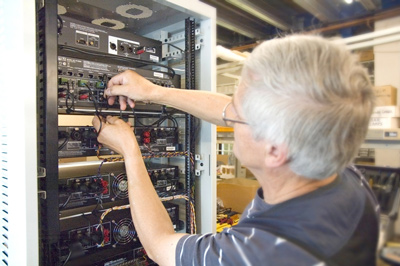
When creating rack elevation you must consider:
- Space of equipment
- Future proofing space
- Ventilation/heat requirements
- Proposed rack sizes
- Location the euipment will be going – base on ergonomics, weight distribution and the ease of wiring.
Is it best to build a rack off-site then deliver it to site?
Predominantly yes, however there are certain situations when you cannot for example some site constraints such as access to the building so you have to build it on site. But most of the time you can build a rack off site, this is usually the best option to do as you have access to all tools etc and wont have to return the next day if you forget anything, you have the ability to test it beforehand and ofcourse get the rack ready in time for when the site is ready.
Why is specifying the rack size and location important?
Ventilation is important in a rack system as there is alot of heat to dissipate, therefore rack space planning and knowing where the rack is going is important – depths and widths are key things to consider. Once you have worked out the total rack units going into your design, you should then think about the size it needs to be calculating for ventilation space for each piece of equipment. As a rule it is advised to always go bigger – always take as much room in that space as you can. You must also bear in mind that there is more to a rack than just the rack unit itself, consider the cables and where they will fit etc. The more space you allow will also help with future proofing, if you later need to add something to the rack the space will account for this.
Why is it important to get the cabling in the back of a rack build right?
It all comes down to serviceability, if it is neat and tidy and you can see what you are looking at then you can service it. And if you can standardise on rack builds with the cable types, cable clours per signal type, cable identification schemes, rack shelves and equipment where possible, this saves time during the build and servicing the system at a later date.