Comparing analogue and network audio systems
It is difficult knowing it you should replace an analogue system, especially when you have spent alot in the equipment. To complicate matters further you can now combine existing analogue audio systems with network audio devices.
So before you decide to throw out the analogue system installed – weigh out all the pros and cons of both digital and analogue. This will then help you with your decision of which solution is best for you.
How do analogue systems work?
Analogue and network audio are similar in there use cases. They differ however in how they are:
• built and designed
• administrated
• system maintenance is both planned and executed
In commercial audio analogue speakers are referred to as 70v/100v line or high impedance speaker systems. A 100v line system distributes analogue audio signal to a chain of passive speakers.
The basic components of analogue audio are:
• Audio source
• Amplifier
• Tone Controller
• Speaker wire
• Speakers that can receive signal
The speakers are run off a single amplifier in a ‘daisy chain’ formation where speaker runs from one speaker to the next.
 What to consider before choosing analogue audio systems:
• The features and functionality is implemented in the central rack. Except for amplifiers, special equipment is needed for storing of pre-recorded announcements, scheduling of the announcements, background music streaming, tone control and integration with other systems e.g. VoIP telephoning systems. All of this means the majority of the cost for analogue systems is in the rack equipment and the configuration. However, in a more simple use case it can be affordable. It is only when there are more complex needs the increase in cost arises.
• Analogue speakers are often cheap and use ‘daisy chain’ wiring. However it is crucial for example zoning different areas the initial design is correct as an analogue system is complex and inflexible if changes are needed.
• It is very difficult to monitor potential issues with an analogue speaker system. With long speaker wire runs, the only solution is to check the whole speaker line.
How do network audio systems work?
A network audio system is very different to analogue. Instead of speakers using the daisy chain wire method, each speaker has its own advanced audio system. Having its own advanced audio system in each speaker means you can control and monitor over a digital audio signal over Ethernet network. The speakers also have inbuilt advanced signal processing this produces high-quality audio. The speakers also have their own energy source using Power-over-Ethernet (PoE).
What to consider before choosing network audio systems:
• Network audio systems are IP based with open API’s. This means the functionality is distributed in the system using management software – each device is controlled over the network. Functionalities such as scheduled announcements are done by using software. A benefit of network audio systems is that it can integrate easily with other IP based systems e.g. security systems, access control etc. However, as network speakers are a high quality audio system in its self they are more expensive than the analogue speakers. Therefore cost of a network audio system would need comparing to a total analogue system including the rack and all equipment that would be needed to complete the end goal.
• When you use network audio systems, there are no limitations with zoning speakers, this is because there is no physical speaker wiring needed. Each speaker can be part of multiple zones and it has flexibility to add/remove speakers individually. Also as it is powered using PoE using the same cable that connects them – this gets rid of the need to run electrical cables. Each speaker does need an Ethernet connection however, the consolidation of equipment and cables to just Ethernet simplifies the maintenance. It also reduces time and cost of installing and configuration as well as ensuring standardisation.
• In network audio having the ability to use IP based health monitoring/configuration of a complete system means you get notified straight away of any problems and have the tools to take immediate actions.
 Which is best for me – analogue or network audio?
It all comes down to what your circumstances are and what in the long term will provide best money value for you using network or analogue audio.
If you are after multiple/flexible zoning functionalities as well as having system health monitoring and easy integration to other systems – network audio is the one for you. Looking at the flexibility and total cost of ownership of network audio usually outweighs the initial spending outlay on hardware.
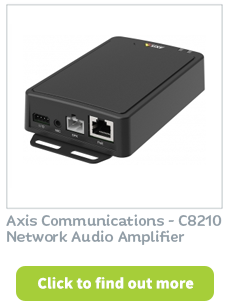
If you have invested already in analogue audio devices and require network audio flexibility however there is hope! Using the Axis audio bridge and Axis network audio amplifier you can get a migration from analogue to network audio. This means you can keep your existing analogue audio system and reap the benefits of network audio.