What is a Boundary Microphone?
What is a Boundary Microphone?
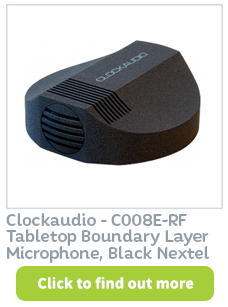 Boundary Microphones are designed for spoken word applications in meeting and conferencing based environments. They are designed to be placed onto a table around 2ft in front of the person who is speaking.
A wide variety of shapes and sizes of Boundary Microphones are available to provide high quality, consistent voice pick-up for large or small groups of people in varying seating layouts and room conditions.
What are the different Polar Patterns available?
Boundary microphones are available with different Polar Patterns; this means they vary in the direction they are able to pick up sound to meet the varying layouts and usage of meeting rooms. For instances, some may require each person in the rooms to have their own – sometimes switchable – microphone. Other meetings might ‘share’ a microphone between certain groups or all attendees, dependent on the number of people and the room size, conditions etc.
Types of Polar Pattern include:
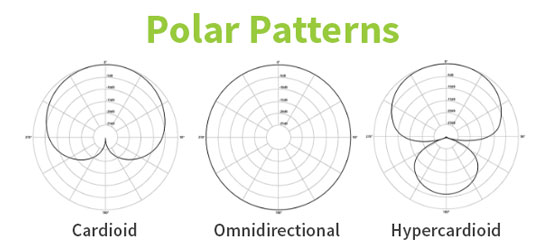
- Cardioid Polar Pattern – This is the most common Polar Pattern. Each speaker should have one of these microphones in front of them.
- Supercardioid or Hypercardioid Polar Pattern – These have a slightly narrower range of picking up sound than a Cardioid Polar Pattern.
- Omnidirectional Polar Pattern – These are much wider and pick up sound from all over the room. One of these can be used in the middle of a small table to pick up the voices of several people who are sat around the microphone.
Switchable Boundary Microphones
Boundary microphones are available either as ‘always on’ or ‘switchable’ which can allow more control of larger groups of people in the meeting or allow for privacy (in video conferencing applications, for example).
An ‘always on‘ microphone is simply that – if the sound system is live (recording or broadcast), then the microphone cannot be switched off and will always pick up the voice.
A switchable microphone allows either the individual speaker – or the chairman of a meeting or sound engineer – to have control over a number of microphones in the room to ensure everyone isn’t speaking at the same time.
Individual microphone switching allows for easy personal mutiny.
A chairman-delegate set-up is often controlled either via software/tablet platforms or via the chairmans microphone which may feature zone/microphone switching.
Switchable microphones often also feature LED light indicators to show if the microphone is ‘live’ or muted. In some cases switching can also control retractable, through desk microphones. In this instance if a microphone is switched off it might retract to be flush with the tabletop when the microphone is live/on it might automatically raise from the table top and switch to live LED indication.
W hat are the advantages of Wired and Wireless Boundary Microphones?
Boundary Microphones are available in wired or wireless options, both have advantages:
- Wired microphones ensure audio travels straight back to the mixer so it can be processed quicker.
- A wireless Boundary Microphone system allows much more flexibility of use in multipurpose rooms.