Are you looking for something specific?
Phone

Or simply give us a call on: +44 (0)115 9770075

Door intercom product image

What is a Contactless Pathway?
What is a Contactless Pathway?

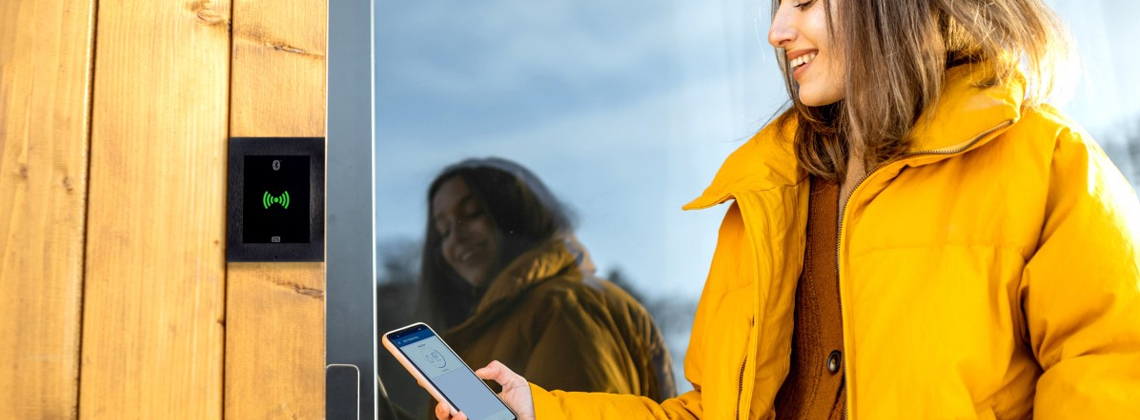
Contactless Door Entry using 2N Bluetooth access control

How to create a touch-free pathway in the workplace

The Coronavirus pandemic has changed the world – particularly in the workplace, as people gradually return to work post-pandemic.

In order to reduce the reoccurrence of another pandemic spike, business owners, building managers, architects and installers are urgently looking at COVID-secure workplace options, social distancing alterations and significant reductions in person-to-person contact.

Designers and technology experts, therefore, are focussing on the journey to work – and movement throughout the workplace – in order to develop what is now increasingly being referred to as a ‘contactless pathway‘.

What is a contactless pathway?
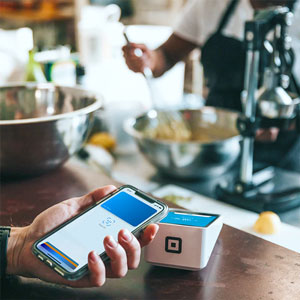
Contactless Pathways using contactless payment methodsBy designing building layouts and routes around the building to promote safe social distancing, we can reduce the proximity of people and reduce the likelihood of the further spread of COVID-19 and other viruses.
But the key issue to consider as we return to work, school, university and other public access environments is the large number of high frequency ‘touch points‘ involved in our daily lives that are likely to spread germs and viruses.

Contactless Pathways focus on significantly reducing those touch points on the journey to and from work and during day-to-day activities. And there are a wide range of contactless technologies already in use and under development which are quickly being adopted in order to increase this touch-free route – and routine – in our daily lives.

There are many contactless technologies which we already take for granted; automated doors for example and, of course, contactless payments via debit/credit cards or from your smartphone. These, and a number of other innovative contactless technologies, are increasingly being integrated into devices and systems in order to reduce touch points and increase the safety and hygiene of our daily pathways.

What contactless technologies & devices are available?

There are a wide range of established and new technologies being adopted to support touch-free or contactless control of devices and building systems. From the simplest PIR (passive infrared sensor) to trigger automatic door releases, to the very latest in wireless smartphone technologies such as NFC, RFID and Bluetooth to make contactless payments or to control your smarthome and automated devices

There are also a wide variety of apps available to control all manner of technology and home devices (from office temperature control and lighting, to turning on a kettle or washing machine!).  And, of course, the latest in voice commands and voice control is now becoming the norm thanks to the huge growth in smart speakers and smart TVs in the home.

In addition, face recognition and thermal detection cameras are becoming an essential part of contactless identification and authentication for access control and door entry.


These contactless technologies are quickly being integrated into a vast range of everyday services and connected devices. Contactless payments are being strongly encouraged in retail outlets, of course, to avoid cash handling to reduce virus spread. We’ve all become used to contactless payments via debit or credit cards using wireless RFID technology, but NFC (near field communication) payments from smart phones and smart watches now also provide a secure, popular and convenient alternative.

Access control and door entry are also now increasingly adopting smart phone technologies for authentication – using a range of contactless technologies. Bluetooth, NFC and QR code apps are now used to provide secure identification for access to office and commercial premises, apartment blocks and hotel rooms.

What might a typical Contactless Pathway include?

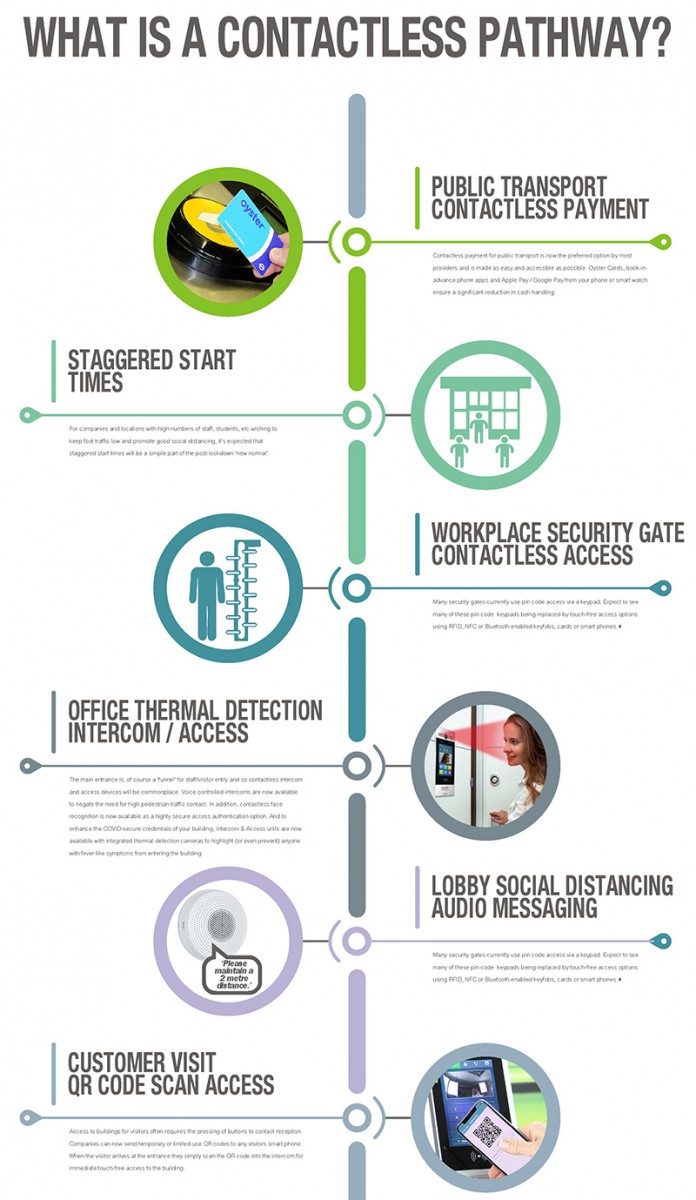
In the infographic shown on this page, we’ve tried to illustrate the variety of contactless technologies and devices which might be found on a journey to, from and during a typical work day.

Public transport to work:
Contactless payment for public transport is now the preferred option by most providers and is made as easy and accessible as possible. Oyster Cards, book-in-advance phone apps and Apple Pay / Google Pay from your phone or smart watch ensure a significant reduction in cash handling.
Meeting room:
Control the meeting room environment or AV systems using touch-free technologies. Lighting, temperature control, automatic blinds and huddle room technology are just some of the systems which can be controlled via automation apps or voice control via smart speakers, for instance.

  • Staggered start times:
    For companies and locations with high numbers of staff, students, etc wishing to keep foot traffic low and promote good social distancing, it’s expected that staggered start times will be a simple part of the post-lockdown ‘new normal’.
  • Workplace Security Gate:
    Many security gates currently use pin code access via a keypad. Expect to see many of these pin code  keypads being replaced by touch-free access options using RFID, NFC or Bluetooth enabled keyfobs, cards or smart phones.
  • Main Entrance:
    The main entrance is, of course a ‘funnel’ for staff/visitor entry and so contactless intercom and access devices will be commonplace. Voice controlled-intercoms are now available to negate the need for high pedestrian traffic contact. In addition, contactless face recognition is now available as a highly secure access authentication option. And to enhance the COVID-secure credentials of your building, Intercom & Access units are now available with integrated thermal detection cameras to highlight (or even prevent) anyone with fever-like symptoms from entering the building.
  • Reception / Lobby:
    Together with increased signage to promote safe social distancing, PIR-triggered audio messaging can provide regular voice recordings to provide reminders on the building’s COVID-safe policies, new one-way layouts or access, etc.
  • Customer visit for meeting:
    Access to buildings for visitors often requires the pressing of buttons to contact reception. Companies can now send temporary or limited-use QR codes to any visitors smart phone. When the visitor arrives at the entrance they simply scan the QR code into the intercom for immediate touch-free access to the building.
  • Grabbing Lunch:
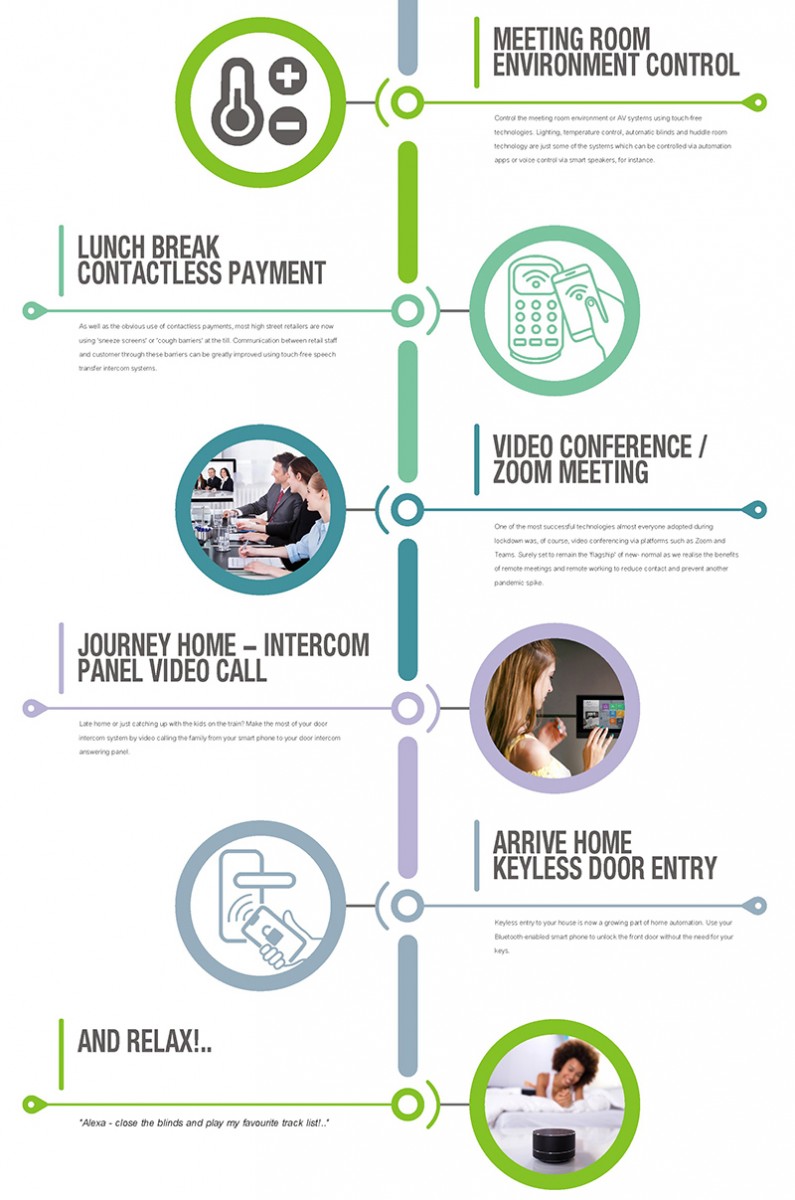
    As well as the obvious use of contactless payments, most high street retailers are now using ‘sneeze screens’ or ‘cough barriers’ at the till. Communication between retail staff and customer through these barriers can be greatly improved using touch-free speech transfer intercom systems.
  • Video Conference / Zoom Meeting:
    One of the most successful technologies almost everyone adopted during lockdown was, of course, video conferencing via platforms such as Zoom and Teams. Surely set to remain the ‘flagship’ of new- normal as we realise the benefits of remote meetings and remote working to reduce contact and prevent another pandemic spike.
  • Journey home:
    Late home or just catching up with the kids on the train? Make the most of your door intercom system by video calling the family from your smart phone to your door intercom answering panel.
  • Arrive home:
    Keyless entry to your house is now a growing part of home automation. Use your Bluetooth-enabled smart phone to unlock the front door without the need for your keys.
  • Time for a sit down!
    “Alexa – close the blinds and play my favourite track list!..”


What is a Contctless Pathway Infographic


Discover 2N with CIE Group

At CIE, we’re proud to be at the forefront of bringing 2N solutions to the UK market.
Contact CIE-Group today; to find out how the 2N range can be used in your next project:

    Featured products

    Read our other blogs

    The rise of 4G LTE Intercoms for Remote Access and Gate Automation

    4G LTE door intercoms offer wireless, remote access control without Ethernet cabling - ideal for gates and remote entry points. They simplify installation, enhance security and are ideal where wired-Ethernet systems are not viable.

    Auracast – The Future of Assistive Listening Technology

    Auracast is set to transform how millions of people experience sound — making the world more inclusive, accessible, and connected than ever before.

    Understanding the Lifecycle Cost of a Public Address & Voice Alarm (PAVA) System

    When investing in a Public Address & Voice Alarm (PAVA) system, it’s essential to look beyond the initial price and understand the true lifecycle costs that impact reliability, compliance, and long-term value.
    © CIE Group Ltd. All rights reserved.